How to Plan Your First Campervan Holiday: Everything You Need to Know
The idea of a campervan holiday is appealing to almost everyone — the freedom to go where you like, sleep where you like, and wake up somewhere beautiful with everything you need close at hand. But if you have never hired a campervan before, it is natural to feel uncertain about where to start. How do you plan a route? Where do you sleep? What happens if something goes wrong? What do you actually need to bring?
The good news is that campervan holidays are far simpler to organise than most people expect. Once you have done your first trip, the planning becomes second nature — but that first one can feel a little daunting. This guide is designed to take you through the whole process, from choosing a destination to arriving home with a van full of memories and very little washing up.
At Camper Charter, we have helped many first-time hirers get onto the road from our base just outside Romsey in Hampshire. We are always happy to talk through the practicalities before you book, and we think you will find the experience far more manageable — and far more rewarding — than you might have imagined.
Step One: Choose Your Destination and Length of Trip
The most common mistake first-time campervan travellers make is trying to cover too much ground. It is tempting to plan an ambitious route that ticks off every must-see location, but driving long distances every day is tiring and leaves very little time to actually enjoy where you are. For a first trip, simpler is better.
A good rule of thumb is to limit daily driving to no more than two to three hours. This gives you time to stop, explore, have lunch somewhere nice, and arrive at your campsite before dark without feeling rushed. For a long weekend of three or four nights, choose one region and stay within it. For a week, two or three different areas is plenty.
From Romsey in Hampshire, you are brilliantly placed to reach some of the best campervan destinations in southern England. The New Forest is on your doorstep. The Jurassic Coast is under two hours away. Dartmoor, Cornwall, the Cotswolds, the South Downs, and Pembrokeshire are all achievable within a day’s drive. Start local for your first trip and save the bigger adventures for when you are more confident.
Step Two: Plan a Loose Route — and Leave Room to Wander
Once you have chosen a destination, map out a rough route but resist the urge to over-schedule it. Campervan travel works best when it has some flexibility built in. You might discover a perfect beach, a brilliant farm shop, or a village that deserves longer than you planned — and that freedom to linger is one of the great pleasures of travelling this way.
Plot your overnight stops first. These are the fixed points around which everything else falls. Between each stop, note two or three things you would like to see or do, but think of them as options rather than obligations. If a route comes together beautifully and you want to press on, you can. If you find somewhere wonderful and want to stay another night, you can do that too — provided your campsite booking allows it.
Stick to A and B roads where possible for your first trip. Narrow country lanes can be stressful in an unfamiliar vehicle, and while campervans are perfectly manageable once you are used to them, there is no need to add extra challenge on day one. Sat-nav apps such as Google Maps or Waze can be set to avoid certain road types, which is helpful.
Step Three: Book Your Campsites in Advance
Campsite booking is the one area of campervan travel where spontaneity can cause problems, particularly in summer. Popular sites in the New Forest, Dorset, Devon, and Cornwall fill up weeks or even months ahead during July and August. Book your pitches before you go, especially for the first and last nights of the trip when flexibility is most important.
For your first trip, choose campsites with good facilities — electric hook-up, toilet and shower blocks, and fresh water points. These take away the anxiety of managing the van’s water and power systems and let you focus on enjoying the holiday. As you become more confident, you may find you prefer quieter, more basic sites — but there is no need to rough it on your first outing.
Good resources for finding and booking UK campsites include Cool Camping (coolcamping.com), Pitchup (pitchup.com), Campsites.co.uk and the Camping and Caravanning Club (campingandcaravanningclub.co.uk). Many campsites also have their own booking systems. Read recent reviews before committing, and check the site’s rules on arrival times, noise, and pets if relevant.
Step Four: Understand What is Included with Your Hire
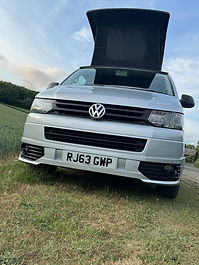
One of the first questions people ask is: what does the van actually come with? This varies between hire companies, so always check carefully before you book. At Camper Charter, our VW campervans are fully equipped for a comfortable trip. This includes a two-burner gas hob, a fridge (apart from Rosie), bedding for two adults, a small table, a couple of camp chairs, a pop-up roof with additional sleeping space in the modern campervans, and all the kitchen essentials you need to cook proper meals on the road.
What you will typically need to bring yourself: food and drink, toiletries, towels, clothing, and any personal items.. A cool bag is useful for grocery shopping runs during the trip.
Before you drive away, make sure you understand how everything works. A good hire company will walk you through the van before you leave — how the hob and fridge operate, how to connect to an electric hook-up, how to fill and empty the water, and how to fold out the bed. Do not be afraid to ask questions. Five minutes of explanation at the start saves a lot of confusion on the road.
Step Five: Driving a Campervan for the First Time
Most people who have never driven a campervan imagine it will feel very different from a car. In reality, our VW campervans are relatively compact and handle much like a large car or family estate. If you have driven a van or a people carrier before, you will feel comfortable very quickly. If you have only ever driven standard cars, it may take a short time to get used to the width and height of the vehicle.
The most important adjustment is thinking about height. Low bridges, car park barriers, and multi-storey car parks that are fine for a car may not be suitable for a campervan. Check the height of your hire vehicle and note it somewhere visible in the cab before you set off. Most UK campsites and tourist attractions have ample height clearance, but it is worth being aware. When in doubt, look for lorry-friendly routes.
Give yourself extra stopping distance and take bends a little wider than you would in a car. Reversing takes practice — if you need to back into a tight space, take it slowly and do not hesitate to get out and check your surroundings. Most campervan drivers become comfortable with the vehicle within the first hour on the road.
Step Six: Sort Out Food Before You Leave
Food planning is worth a small amount of thought before you set off. You do not need to plan every meal in advance, but a basic shop before you leave home means you will not arrive at the campsite on the first evening and discover you have nothing to cook. A few essentials — pasta, tins of tomatoes, eggs, oil, bread, and snacks — give you a solid foundation to build from.
Top up at local supermarkets or farm shops as you travel. Part of the pleasure of a campervan trip is shopping locally — picking up fresh fish from a harbour, vegetables from a farm gate, or a local cheese from a deli. Keep the fridge stocked with two to three days of meals and restock as you go. This is far more enjoyable than lugging a week’s worth of groceries from home.
One-pot meals, foil parcel cooking, and simple hob suppers are the staples of good campervan cooking. Our guide to easy camping recipes covers eight brilliant options in detail — from a chorizo and butter bean stew to foil-baked salmon and campfire banana parcels. You can find it on the Camper Charter blog at www.campercharter.co/inspiration.
Step Seven: On the Road — Getting the Most from Your Trip
Once you are out there, the key is to let go of the schedule and trust the trip to unfold. Campervan travel has a rhythm of its own — mornings tend to start slowly and pleasantly, afternoons are for exploring or driving, and evenings are for cooking, sitting outside, and doing very little. Embrace that pace rather than fighting it.
Build in at least one morning with no plans at all. Some of the best memories from campervan trips come from unscheduled hours — a walk that turned into something spectacular, a village you stumbled into, a conversation with another camper who pointed you towards somewhere you would never have found on your own.
Connect with fellow campervan travellers on the site. Campsites tend to attract curious, sociable people, and there is usually no shortage of advice, recommendations, and good conversation if you want it. And if you just want peace and quiet with a book and a coffee, that is equally valid.
Quick Reference: Practical Tips for First-Time Hirers
Check the height of your campervan and keep it noted in the cab. Avoid multi-storey car parks and check bridge heights on planned routes.
Book your first and last night campsites well in advance, especially in summer. Midweek nights are more flexible.
Pack lighter than you think you need to. Storage in a campervan is limited, and you will inevitably acquire things during the trip.
Bring a decent road atlas as a backup. Mobile signal is patchy in rural areas and sat-nav can let you down at the worst moments.
Set up the bed before you need it. Doing it at 10pm on day one is an avoidable lesson.
Keep a roll of kitchen paper, a multi-surface spray, and a small dustpan in the van. Campsite cooking can get messy.
Download offline maps on Google Maps or another map app before you leave. This saves data and works in areas with no signal.
Allow time to return the van properly — empty the fridge, dispose of waste, and leave a little time for the handover.
Take photographs of the van before and after pick-up, including any existing marks. Standard good practice for any vehicle hire.
Relax. Things will not always go to plan, and that is fine. Flexibility and good humour are the two most important items to pack.
Ready to Book Your First Campervan Trip?
Camper Charter offers VW campervan hire from just outside Romsey in Hampshire — a brilliant base for exploring southern England and beyond. Our fully equipped vans are ready to go, and we are always happy to chat through your plans, suggest routes, and answer any questions from first-time hirers before you commit to a booking.
Whether you are planning a long weekend on the Jurassic Coast, a week in Cornwall, or a gentle introduction to campervan life somewhere closer to home, we would love to help you get on the road. The first trip is always the one people talk about most — make it a good one.
Browse availability and book at www.campercharter.co
Or send us a message on WhatsApp: 07908 293703




Comments